


Water Parks and Zoos: a winning combination
September 22, 2024
It may not seem like an obvious combination: combining a zoo with a water park. But in practice it has proven to be a very successful model. And I am not talking about a zoo with a splash pad to entertain children on hot days, but about integrated attractions where the experience of zoo and water park merge seamlessly.
This richly illustrated blog discusses various spatial and functional models and discusses a number of appealing examples from all over the world. The Dutch situation is also discussed. And last but not least, I want to discuss my own experiences as a designer of water parks and water attractions in and around zoos.
Integrated attractions, second gate or hybrid?
Roughly speaking, three different models can be distinguished: (1) a water park with combined animal attractions, (2) a water park as a more or less separate second gate park next to the zoo or (3) a hybrid model where the water park and zoo merge.
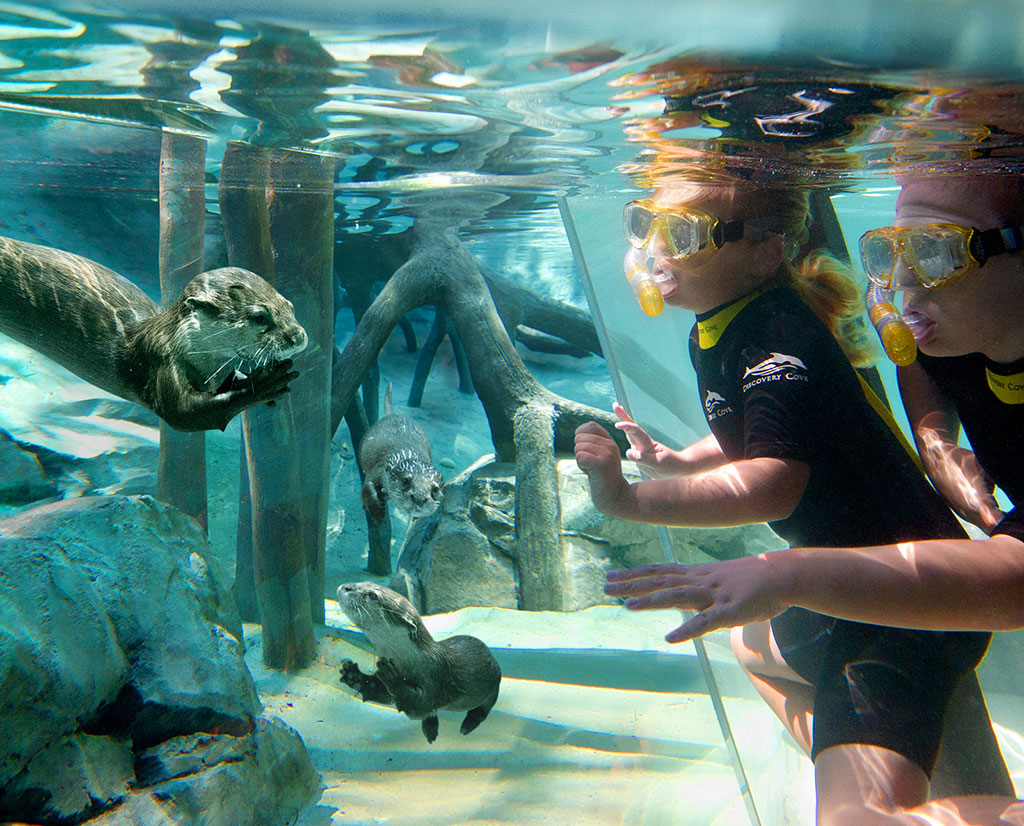
Combining a water attraction and an animal enclosure/habitat can be done on a small scale but requires specialist knowledge regarding animal welfare, care and technique. Examples are slides through aquariums, snorkeling with or with a view of various fish or animals or lazy rivers through or along animal enclosures.
You can also build a completely new water park next to your existing zoo. The big advantage of a so-called second gate park is that you upgrade a day attraction to a multi-day experience, which increases income accordingly. In addition, you can retain people for longer by offering overnight accommodation combined with access to multiple parks. Although the investment here will be (considerably) higher, you can tackle this in phases and if both parks are physically separate from each other, you will not be hindered by practical matters when building a new park or a new attraction.
A (large-scale) hybrid model will be the most difficult to realize in practice due to the many boundary conditions, the complexity of the design and the initially higher investments. These parks are often completely conceived on the drawing board and built in one go or in phases based on a master plan/final image.
The geographical location and the type of zoo play a major role due to the influence of the climate on both water attractions and the animal enclosures. Subtropical animals in a (sub)tropical environment have fewer requirements for accommodation and habitat than in a colder climate. And besides: a water park in the subtropics can also simply be realised outdoors, while in a colder climate the choice will most likely fall on a (largely) indoor water park.
Below are a number of examples of zoos with water parks or water attractions from all over the world.
Atlantis Aquaventure and Siam Park
Belonging to the largest and best water parks in the world, both the three Atlantis Aquaventure Water Parks (located in the Bahamas, on Dubai’s Palm Island and on Hainan in China) and Siam Park (located on Tenerife) have integrated animal attractions in their water parks. In Siam Park, a branch of the Mai Thai River takes you straight through an aquarium and on the transparent freefall slide from the Tower of Terror you race through a shark enclosure.
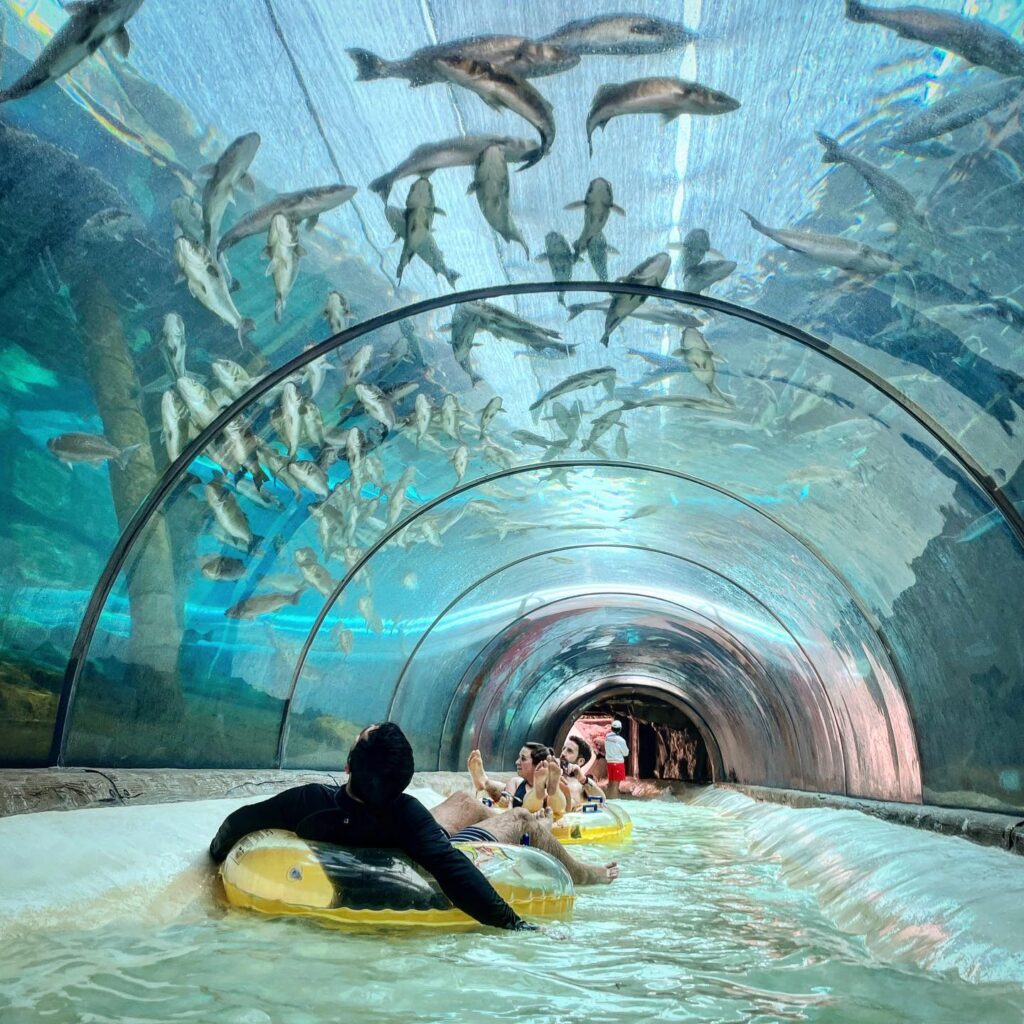
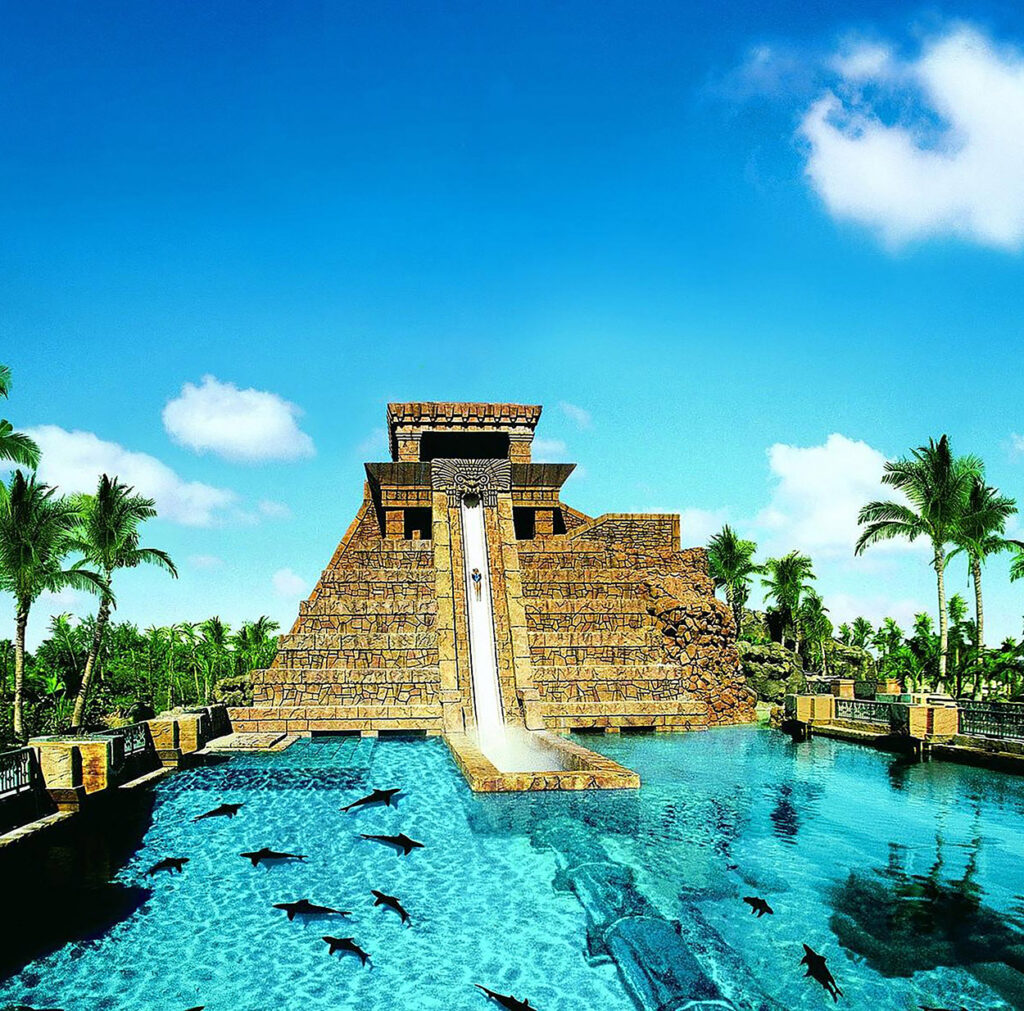
In the Aquaventure Waterparks -integrated into the Atlantis Resorts, but also accessible as a day guest- you will find several pools with sea animals, including stingrays, sharks and dolphins. Following the same proven principle as the Tower of Terror in Siam Park, you will find the Leap of Faith here. In addition, visitors can snorkel in enormous aquariums full of tropical fish and reef sharks.
Xel-Há and Discovery Cove
Xel-Há is a nature park and ecotourism attraction in the Riviera Maya, Mexico, near the city of Tulum. The park is known for its natural beauty and offers a combination of water activities, ecotourism, and environmental education.
The lagoon is the main attraction of Xel-Há. It is a huge natural inlet where saltwater from the ocean and freshwater from underground rivers meet. Visitors can snorkel in the crystal clear waters, which are teeming with colorful fish and other marine life. The park features numerous water rides and activities ranging from zip lines to natural lazy rivers and from cliff jumping to a water slide tower.
Discovery Cove, located in Orlando, Florida is a luxury day resort and wildlife park with a focus on personal and interactive animal experiences.
The park features beautiful sandy beaches and swimming pools that create a tropical atmosphere. You can snorkel in a vast, tropical coral reef among colorful fish, rays, and other marine life. The reef is designed to mimic a natural coral reef, complete with underwater caves and waterfalls. And the park has several lazy rivers and slow-moving rivers where visitors can float and enjoy views of marine life and tropical vegetation.
Discovery Cove has restricted access: visits are by reservation and the number of visitors is limited to ensure an exclusive experience.


SeaWorld’s Aquatica
The Aquatica water parks are part of the SeaWorld Parks & Entertainment group and are known for their tropical theming, exciting water rides and animal interactions. SeaWorld currently has two Aquatica water parks in the United States: Aquatica Orlando (Florida) and Aquatica San Antonio (Texas). The former Aquatica San Diego was transformed into the family park Sesame Street in 2020.
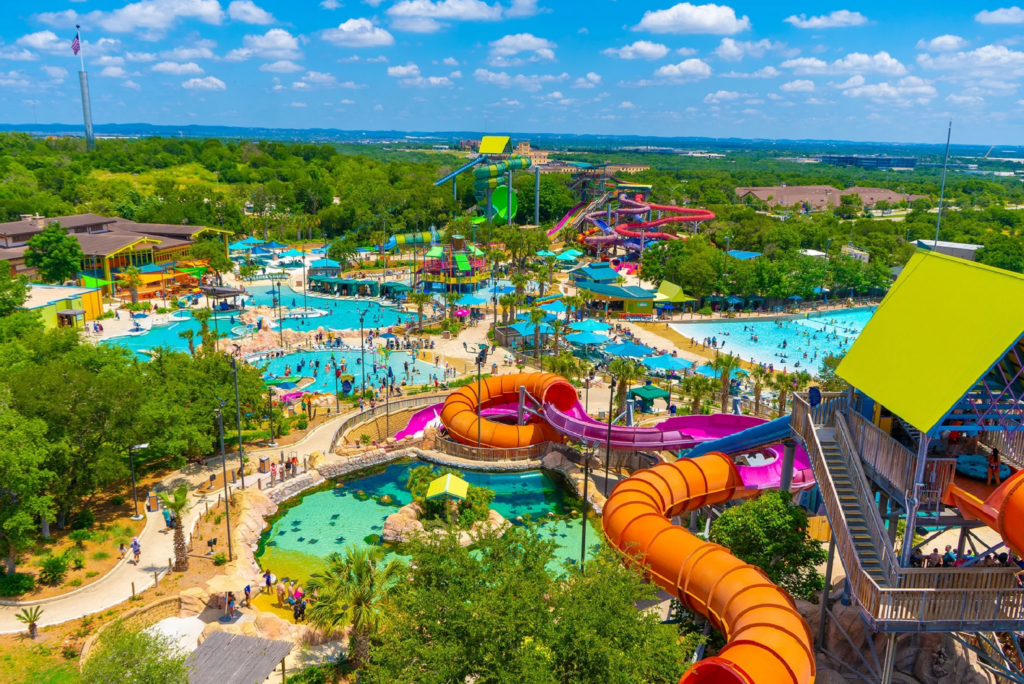
These parks combine the water park experience with SeaWorld’s focus on animals and nature, making them unique from other water parks.

Columbus Zoo and Hattiesburg Zoo
In the US, there are several combinations of a zoo with an (outdoor) water park, such as Columbus Zoo (with Zoombezi Bay Waterpark) and Hattiesburg Zoo (Serengeti Springs Waterpark). Zoombezi Bay is a worthy second gate water park that welcomes more than 400,000 guests in the summer.
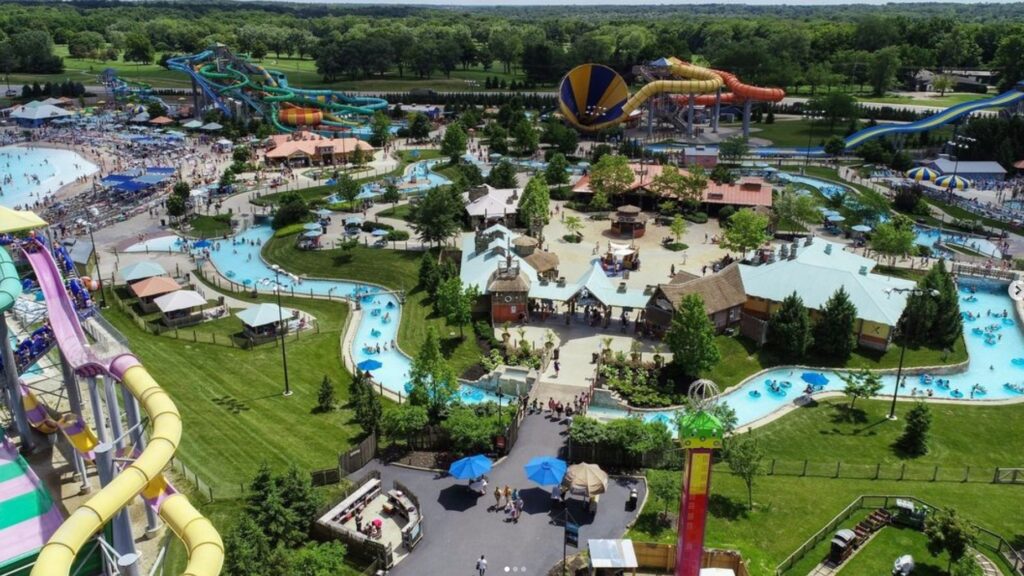
Phase 1 of Serengeti Springs Waterpark – which focuses on families with young children – opened in 2024 and was immediately visited by 230,000 guests. The extra income that this generates is invested in a phase 2 expansion of the water park on the one hand and in research and nature conservation on the other.

Zoomarine and Aquasplash Marineland
In Southern Europe, there are several hybrid parks where water attractions are combined with (marine) zoos. In the Algarve in Portugal, you will find the well-known Zoomarine that is steadily working on the development of their water park Zoomarine Beach. In 2024, Zoomarine will open the spectacular dueling slide Quetzal.

Marineland in the South of France’s Antibes covers 16 hectares and includes several parks and a hotel. In addition to a large marine zoo, you will also find the Aquasplash water park and an Adventure Golf Park here. There has been talk of expanding the water park for years because it is often very busy here in the summer, resulting in long queues.

Dutch Examples: Center Parcs, Dolfinarium and De Beekse Bergen
Center Parcs is a pioneer in the field of water parks (called Aquamundo) and it is therefore not surprising that they were the first in the Netherlands to add a coral pool to their range of attractions. In 1992, the first coral pool opened in the Heijderbos. This coral pool gives guests the opportunity to snorkel in a tropical swimming pool with real coral, colorful fish and an atmosphere that resembles a tropical underwater world. This concept was very innovative at the time and provided a unique experience.

Dolfinarium Harderwijk opened its doors in 1965 and has since grown into a popular tourist destination in the Netherlands. It is one of the largest marine zoos in Europe and offers visitors a unique opportunity to see dolphins and other marine mammals up close. It also has a small interactive water play area especially for children. It consists of several fountains, a water playground and a slide complex

Safaripark De Beekse Bergen followed a different route. They developed the Safari Resort which offers a special experience by allowing guests to spend the night among wild animals such as giraffes, zebras and antelopes. One of the facilities of this resort is a small themed water park.

Planned Projects
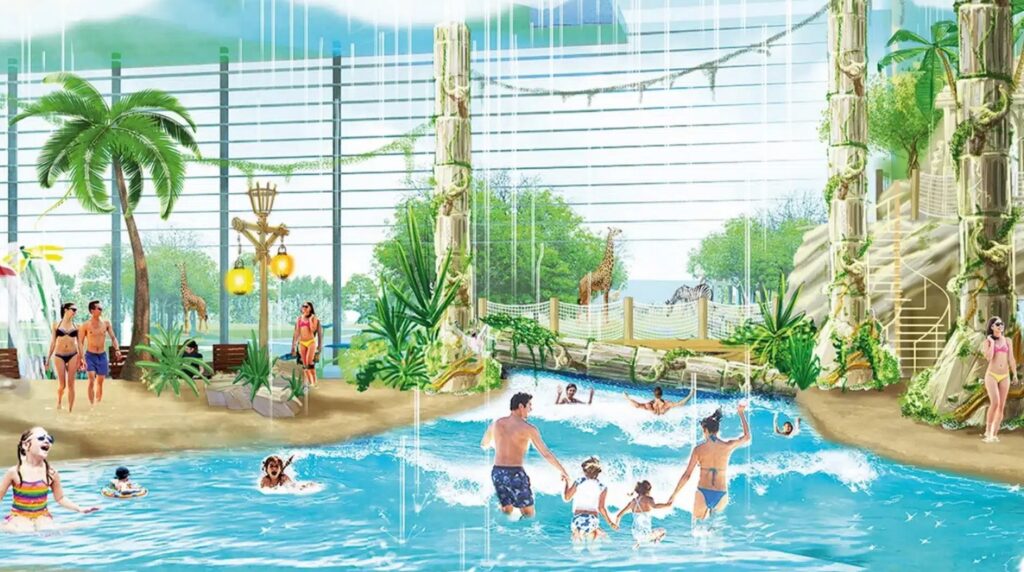
In Belgium, Pairi Daiza (one of the best visited zoos in Europe with over 2 million visitors) is working hard on a gigantic tropical greenhouse with an indoor jungle (the so-called Sanctuary). Part of these plans is also a water park that will not only have spectacular slides, but from which guests can also swim or float partly through the Sanctuary and see animals in their natural habitat.
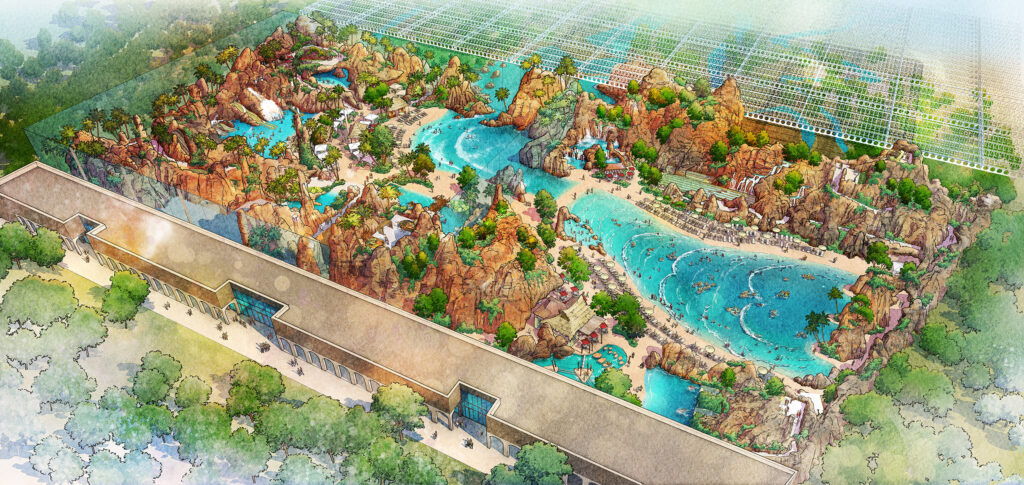
In England, Chessington World of Adventures also presented plans for its own water park partly integrated into the existing Chessington Zoo. This resort already has several themed hotels.
Opportunities in the Netherlands
The Netherlands has many well-visited and high-quality zoos and for some the addition of a water park could be a good idea. Of course, this idea must fit the owner’s vision and be based on a thorough feasibility study. The availability of financial resources and -not unimportant- space are also important boundary conditions. To go into this in more detail now is too much of a good thing, but perhaps nice for a future blog!?
B&Eau
In the past, during my employment at ProSlide, I was very regularly involved in the design and development of the combination of water park and zoo. In almost all projects I had to deal with passionate owners with whom it was great to work to convert the first ideas into a powerful vision. On that basis, a strong spatial framework was then created that served as the basis for the attraction selection and a concept master plan.
I was involved as a designer in a number of the above-mentioned projects. Due to the fact that a number of other -no less spectacular- projects are still in full development (or are on hold), I cannot mention names or share too many details. But in general terms I can try to show some backgrounds and special design solutions.
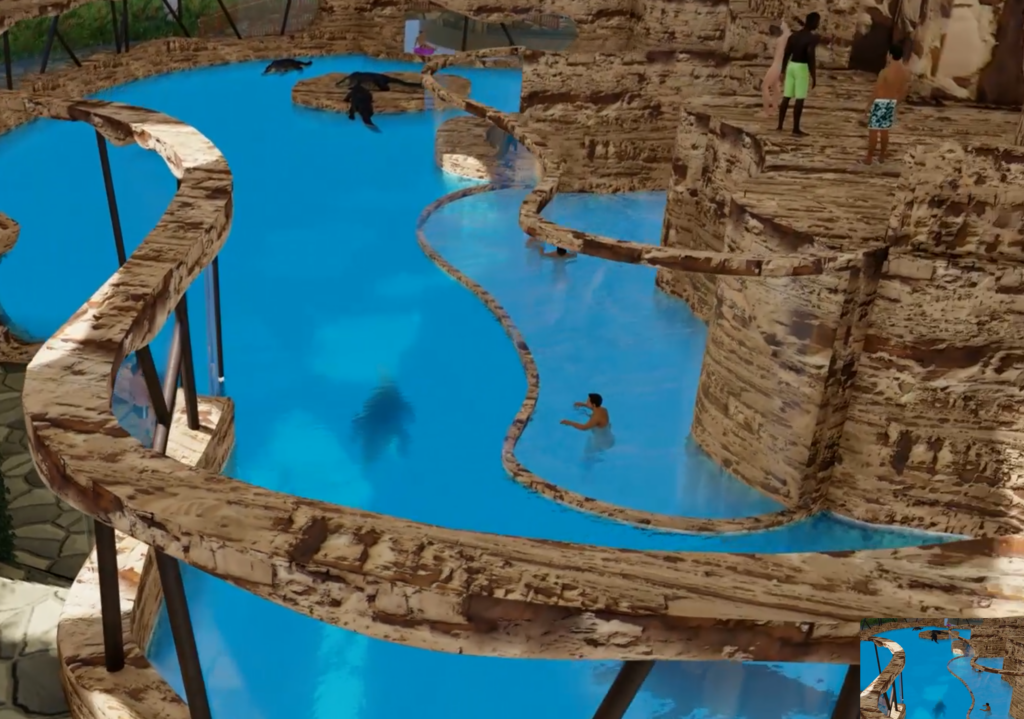
For a project in Southern Europe, I was allowed to work on a design for a full-fledged second gate water park as an addition to a large zoo. The most striking element was a crocodile enclosure with a lazy river flowing through it and a jumping rock in the middle. Both attractions were of course shielded by glass walls and developed in consultation with biologists from the zoo to guarantee animal welfare.
I was also responsible for an expansion plan for an existing zoo that wants to add a water park of over 10 hectares in hilly terrain. And hilly terrain offers great opportunities to integrate attractions by making use of the natural differences in height. This park also plans to build a large hotel with 400+ rooms, which would make it a real multi-day destination.
A hybrid whitewater course/lazy river of 300 meters long that bridges a height difference of no less than 10 meters and where you swim eye to eye with otters, flamingos and tropical fish along the way: I really hope that this design will see the light of day soon!
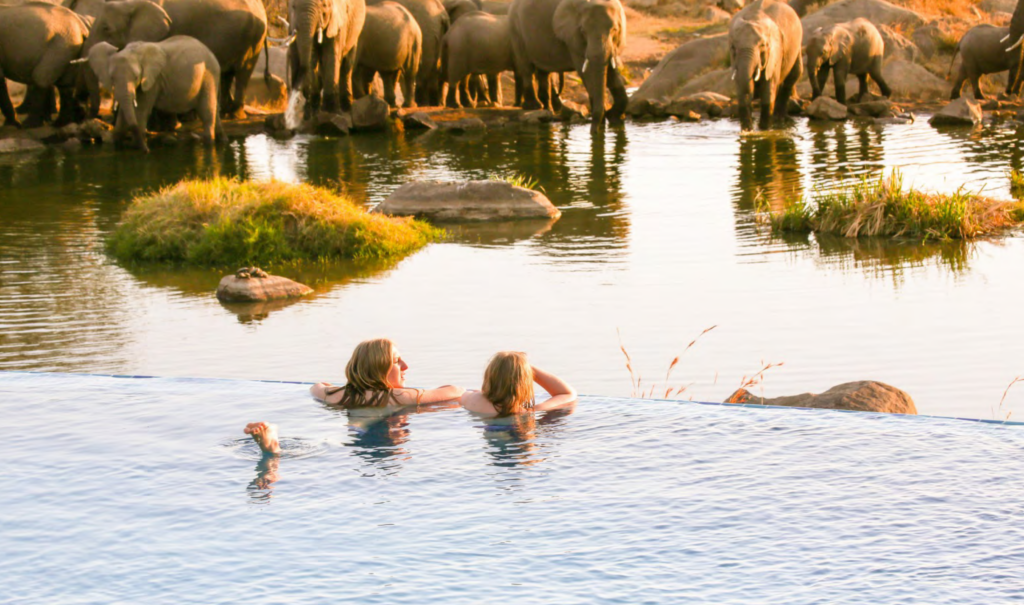
For a Northern European client I worked on a water park with a number of infinity pools overlooking a Savannah with giraffes, elephants and rhinos and a lazy river that flows through a number of habitats of different animals.
Animal welfare
It is self-evident to me that animal welfare is always guaranteed. If in doubt, I would always choose not to do something. In all projects I have worked closely with biologists to ensure optimal designs. Sufficient space and as close as possible to a natural habitat for the animals, with always a lot of experience, (out)view and safety for guests.
Conclusion: the possibilities are endless!
There are so many possibilities in the field of water attractions and zoos. There are many appealing examples worldwide and there is certainly something special coming. I hope this blog offers a nice overview and inspires at the same time!
If you have any questions or a nice project in mind? Please feel free to contact me